



Cardiology
Cardiovascular diseases are among the most common health problems worldwide today. Early diagnosis, accurate evaluation, and up-to-date treatment methods carry great importance for protecting heart health, improving quality of life, and ensuring long-term follow-up.
The MediHeart Medical Center Cardiology Department offers a wide range of services spanning preventive cardiology, interventional cardiology, arrhythmia treatment, and artificial intelligence-assisted cardiac analysis systems.
The founder of our department, Prof. Dr. Osman Beton, possesses over 20 years of academic and clinical experience in cardiology, interventional cardiology, electrophysiology, arrhythmology, and heart failure. Offering comprehensive cardiology services in North Cyprus, he specializes particularly in complex coronary interventions, arrhythmia treatments, structural heart diseases, and advanced cardiology technologies.
MediHeart Medical Center serves patients coming not only from the Guzelyurt region, but from all parts of TRNC, primarily Lefke, Nicosia, Kyrenia, Famagusta, and Iskele. Furthermore, cardiology evaluation and follow-up processes are planned for international patients applying from across North Cyprus and Cyprus.
What is Cardiology?
Cardiology is the internal medicine specialty that examines diseases of the heart, heart valves, heart muscle, and vascular system, encompassing diagnosis, treatment, and long-term follow-up processes.
Modern cardiology covers not only the treatment of heart diseases, but also:
Early diagnosis of heart diseases
Cardiovascular risk analysis
Preventive cardiology applications
Interventional treatments
Arrhythmia management
Evaluation of structural heart diseases
At the MediHeart Medical Center Cardiology Department, all evaluations are planned in line with current international cardiology guidelines.
Prof. Dr. Osman Beton
As the founder of MediHeart Medical Center, Prof. Dr. Osman Beton serves in North Cyprus with his academic research in the field of cardiology and extensive experience in advanced interventional cardiology.
His areas of expertise include:
Interventional Cardiology
Electrophysiology
Arrhythmology
Coronary Artery Diseases
Heart Failure
Heart Valve Diseases
Atrial Fibrillation
Complex Coronary Interventions
Structural Heart Diseases
Permanent Pacemaker
TAVI
Complex Arrhythmias
With an approach that prioritizes patient information and shared decision-making throughout the treatment process, he creates an evaluation plan tailored to the needs of each patient.
Which Diseases Does the Cardiology Department Treat?
Evaluation and follow-up for numerous cardiovascular diseases are performed in the Cardiology Department.
The main areas of evaluation are as follows:
Coronary artery disease
Chest pain (Angina)
Post-heart attack follow-up
Hypertension
Heart failure
Atrial fibrillation (AF)
Atrial flutter
Supraventricular tachycardia
Palpitations
Arrhythmias
Heart valve diseases
Congenital heart diseases
Peripheral vascular diseases
Cardiomyopathies
Aortic diseases
Cardiac risk assessment
Which Complaints Warrant a Visit to a Cardiology Specialist?
The following symptoms may be related to the cardiovascular system:
Chest pain
Pressure sensation in the chest
Tightness in the chest
Heart palpitations
Irregular heartbeat
Shortness of breath
Fatigue quickly
Fainting
Dizziness
Swelling in the legs
Hypertension
Chest pain during exercise
Family history of early-onset heart disease
These symptoms may not stem solely from cardiological diseases. A definitive evaluation is made after an examination by a specialist physician.
Important Information: Sudden onset of severe chest pain, severe shortness of breath, loss of consciousness, or symptoms suggesting a heart attack can be life-threatening. In this case, consult the nearest fully equipped emergency service without delay.
How is a Cardiology Examination Performed?
During the initial evaluation:
A detailed medical history is taken.
Family history is evaluated.
Risk factors are identified.
A physical examination is performed.
Blood pressure is measured.
Cardiac evaluation is conducted.
Necessary diagnostic tests are planned.
As a result of the examination, a personalized diagnosis and follow-up process is established.
Diagnostic Tests Performed in the Cardiology Department
Depending on the patient’s complaints, the following cardiological investigations can be planned.
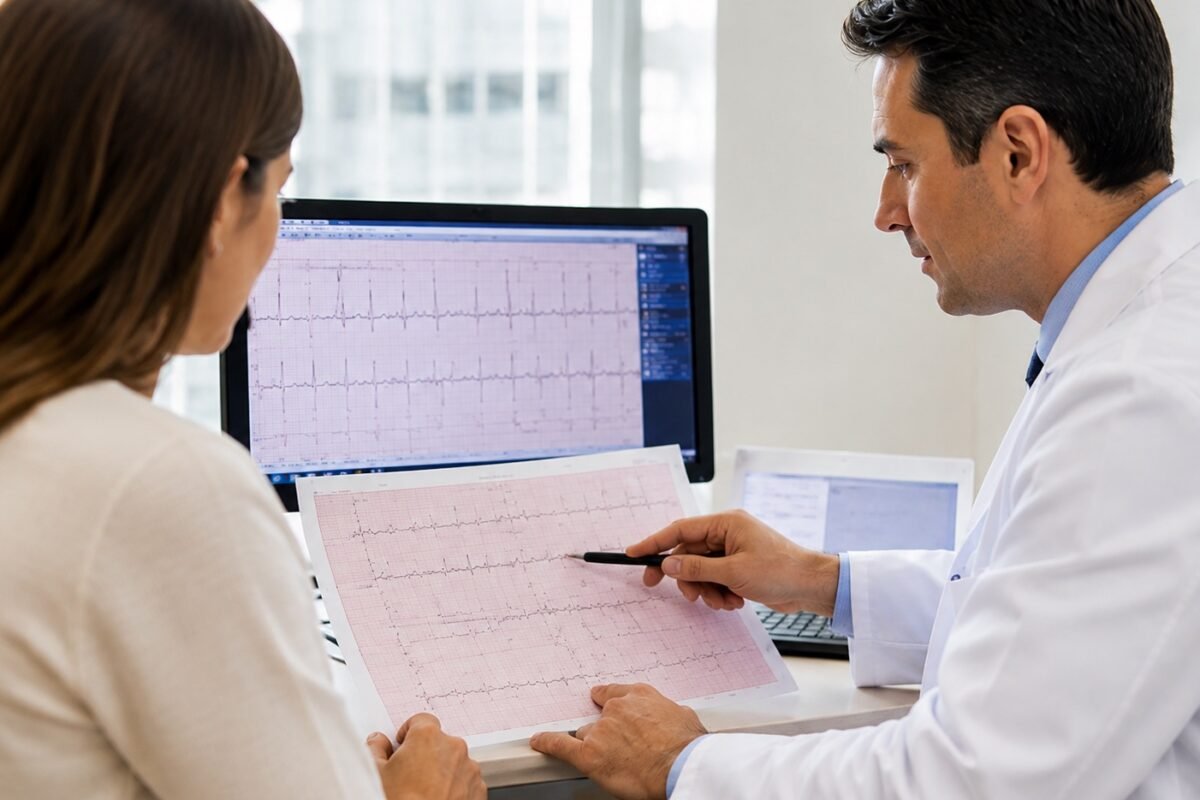
Electrocardiography (ECG)
ECG is one of the fundamental cardiological tests evaluating the electrical activity of the heart.
For patients seeking ECG in Cyprus, TRNC ECG, Guzelyurt ECG recording, or heart checkups, ECG can be performed at the MediHeart Medical Center Cardiology Department in line with physician evaluation.
ECG may be requested in conditions such as:
Chest pain
Palpitations
Fainting
Suspected arrhythmia
Hypertension
Heart checkup
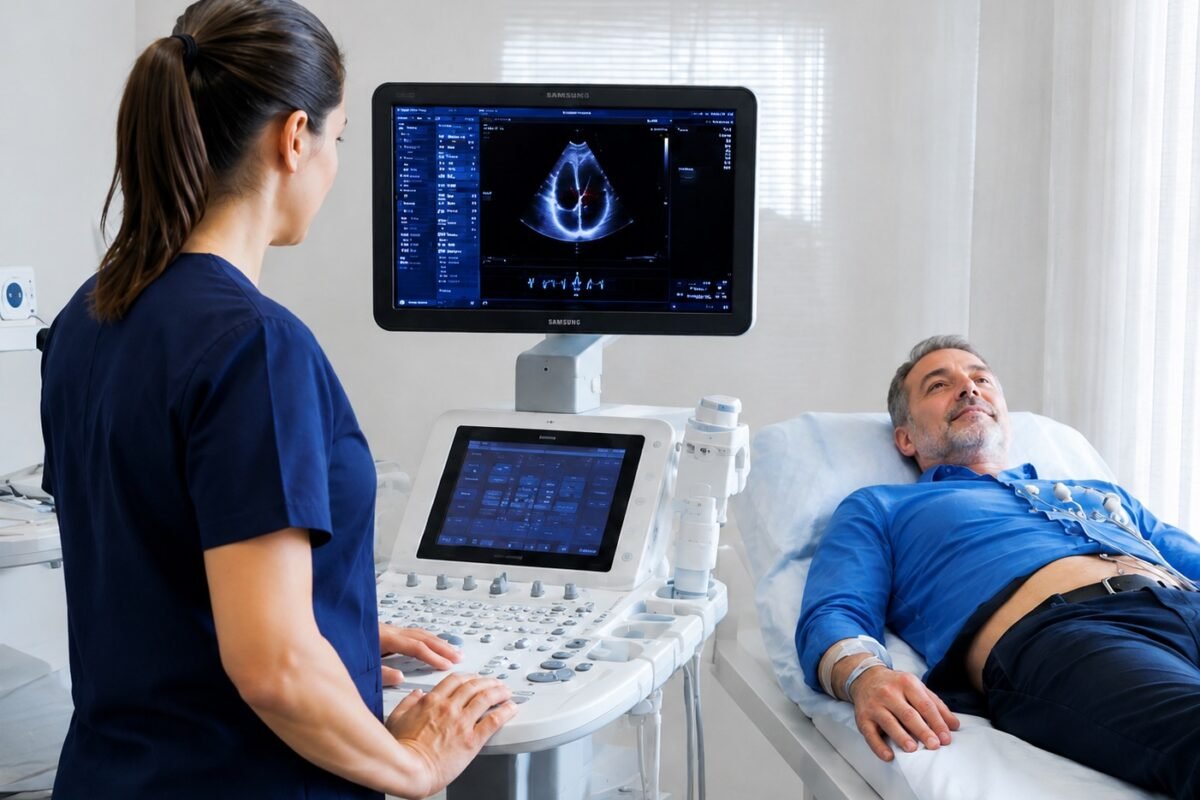
Echocardiography (ECHO)
Echocardiography (ECHO) is a non-invasive imaging method that evaluates the structure and functions of the heart using sound waves.
It is one of the frequently preferred cardiological evaluations by our patients searching for Cyprus ECHO, TRNC Echocardiography, and Guzelyurt ECHO.
With echocardiography, the following can be evaluated:
Heart valves
Heart muscle
Heart chambers
Pumping function
Congenital heart diseases
Holter Rhythm Monitoring
Palpitations or irregular heartbeats may not always occur during an examination.
Therefore, Holter ECG is an important diagnostic method allowing the recording of heart rhythm for 24 hours or longer.
Within the scope of TRNC Holter, Cyprus Holter, and Guzelyurt Holter services, rhythm evaluation can be planned for suitable patients.
Blood Pressure Holter
Blood Pressure Holter, used to evaluate blood pressure changes throughout the day, can be planned by the physician when deemed appropriate in cases such as:
Hypertension
Masked hypertension
Treatment monitoring
Exercise Stress Test
The Exercise Stress Test is one of the cardiological investigations used to evaluate the heart’s response during exercise.
It can be planned in suitable clinical situations for patients seeking Cyprus Stress Test, TRNC Stress Test, or Guzelyurt Stress Test.
Interventional Cardiology
As one of Prof. Dr. Osman Beton’s fields of expertise, Interventional Cardiology is an advanced branch of cardiology encompassing the treatment of cardiovascular diseases using catheter technologies without the need for surgery.
At MediHeart Medical Center, the following procedures can be planned for suitable patients:
Coronary Angiography
Wrist (Radial) Angiography
Coronary Stenting
CTO Interventions
Structural Heart Diseases
Heart Valve Interventions
Electrophysiological Procedures
Wrist (Radial) Coronary Angiography
Coronary angiography is the main interventional cardiology procedure providing visualization of the vessels feeding the heart.
Radial (Wrist) Angiography, preferred by Prof. Dr. Osman Beton for suitable patients, can be performed as an alternative to classic groin access.
This method is evaluated in appropriate clinical situations for patients searching for Cyprus Angiogram, TRNC Coronary Angiography, or Wrist Angio Guzelyurt.
Coronary Stent Applications
Stent placement can be planned for suitable patients with detected stenosis in their coronary vessels.
Our department offers current interventional cardiology applications such as:
Drug-eluting stents
New-generation bioadaptor technologies
Complex coronary interventions
Chronic Total Occlusion (CTO) Interventions
Conditions where coronary vessels are completely blocked and the blockage has persisted for a long time are called Chronic Total Occlusions (CTO). Such vascular blockages represent one of the areas of interventional cardiology requiring the most advanced expertise.
Prof. Dr. Osman Beton evaluates CTO interventions for suitable patients in line with current international techniques.
CTO interventions can be planned after a detailed cardiological evaluation in cases such as:
Long-standing fully blocked coronary vessels
Advanced coronary artery disease
Suitable patients with a history of prior stenting or bypass
Chest pain complaints affecting quality of life
DynamX® Bioadaptor Technology
Coronary stent technologies are constantly evolving. One of these advancements, the DynamX® Coronary Bioadaptor, is a new-generation bioadaptor technology designed to support vascular physiology.
Unlike traditional drug-eluting stents, this system has been developed to adapt to vessel movement in suitable patients. Following the gradual dissolution of the polymer structure over time, the design of the implant aims to establish a structure more compatible with vessel physiology. Long-term vessel function preservation data is being investigated in clinical studies.
Prof. Dr. Osman Beton evaluates this technology for deemed suitable patients in accordance with current scientific data.
New Generation Bioadaptor Stent Technologies
Bioadaptor technologies used in the treatment of coronary artery disease are among the new-generation approaches aiming to support the natural movement of the vessel wall.
The goals of these systems include:
Preserving vessel lumen openness
Adapting to the natural motion of the vessel
Supporting long-term hemodynamic functions
Contributing to the preservation of vessel physiology in suitable patients
Which stent technology to utilize is determined by evaluating vessel structure, lesion characteristics, and the patient’s general health status.
Electrophysiology and Arrhythmology
Disorders occurring in the electrical conduction system of the heart are called heart rhythm disorders (arrhythmia).
Electrophysiology and Arrhythmology, one of Prof. Dr. Osman Beton’s specializations, deals with the diagnosis and treatment of palpitations, irregular heartbeats, and complex rhythm disorders.
At MediHeart Medical Center, advanced cardiological procedures can be evaluated for suitable patients, such as:
Electrophysiological Study (EPS)
Atrial Fibrillation evaluation
Atrial Flutter
SVT
Ventricular rhythm disorders
Loop Recorder evaluation
Permanent Pacemaker planning
Atrial Fibrillation (AF) Treatment
Atrial fibrillation is one of the most common rhythm disorders in adults.
Since it can lead to outcomes such as palpitations, shortness of breath, rapid fatigue, and an increased risk of stroke, detailed evaluation in suitable patients is of great importance.
The treatment plan is established by taking into account the patient’s:
Age
Complaints
Heart structure
Accompanying diseases
Stroke risk
Ablation Treatments
Catheter ablation can be evaluated in certain rhythm disorders where medical therapy is insufficient or deemed appropriate.
Current methods evaluated by Prof. Dr. Osman Beton for suitable patients include:
Atrial Fibrillation ablation
Atrial Flutter ablation
SVT ablation
Radiofrequency ablation
Cryoablation
Pulsed Field Ablation (PFA)
The treatment approach for each patient is planned individually.
3D Electro-Anatomical Mapping
Three-dimensional mapping systems used in complex rhythm disorders assist in detailed evaluations of the heart’s electrical activity.
Thanks to this technology, the following become possible for suitable patients:
Identifying the arrhythmia focus
Ablation planning
More precise catheter guidance
Permanent Pacemaker, ICD, and CRT
In certain rhythm disorders or diseases affecting the electrical conduction system of the heart, cardiac device therapies may come to the agenda.
Device therapies evaluated by Prof. Dr. Osman Beton for suitable patients include:
Permanent Pacemaker Can be evaluated in certain conditions where the heart rate drops below normal.
ICD (Implantable Cardioverter Defibrillator) A device therapy that can be evaluated in suitable patients at risk of life-threatening rhythm disorders.
CRT (Cardiac Resynchronization Therapy) A device therapy aimed at supporting the coordination of heart contractions in patients with heart failure who meet specific criteria.
Loop Recorder
Some rhythm disorders may not be detected during short-term ECG or Holter monitoring.
In such cases, a Loop Recorder can be evaluated for long-term rhythm tracking in suitable patients.
TAVI (Transcateter Aortic Valve Implantation)
TAVI is one of the interventional methods that can be evaluated as an alternative to surgery for suitable patients in the treatment of aortic valve diseases.
In this method, valve replacement can be performed via a catheter.
Which patients are eligible for TAVI is determined after a detailed cardiological evaluation.
EECP (Enhanced External Counterpulsation)
EECP (Enhanced External Counterpulsation) is a non-surgical, non-invasive treatment approach used to support the cardiac rehabilitation process in selected patients.
During treatment, air cuffs placed on the legs inflate and deflate synchronously with the heart rhythm, aiming to support circulation. EECP can be evaluated for suitable patients as an option that may contribute to supporting coronary circulation, reducing cardiac workload, and improving exercise capacity. In international practices, it is utilized as part of cardiac rehabilitation programs in cases of stable angina, certain chronic coronary artery disease cases, and eligible heart failure patients.
Suitability for EECP is determined after a detailed cardiology evaluation.
Artificial Intelligence-Assisted Cardiac Risk Assessment
AI-assisted analysis systems are among the new-generation technologies supporting a physician’s clinical evaluation in cardiology practice.
At the MediHeart Medical Center Cardiology Department, evaluations regarding the following systems can be made for suitable patients.
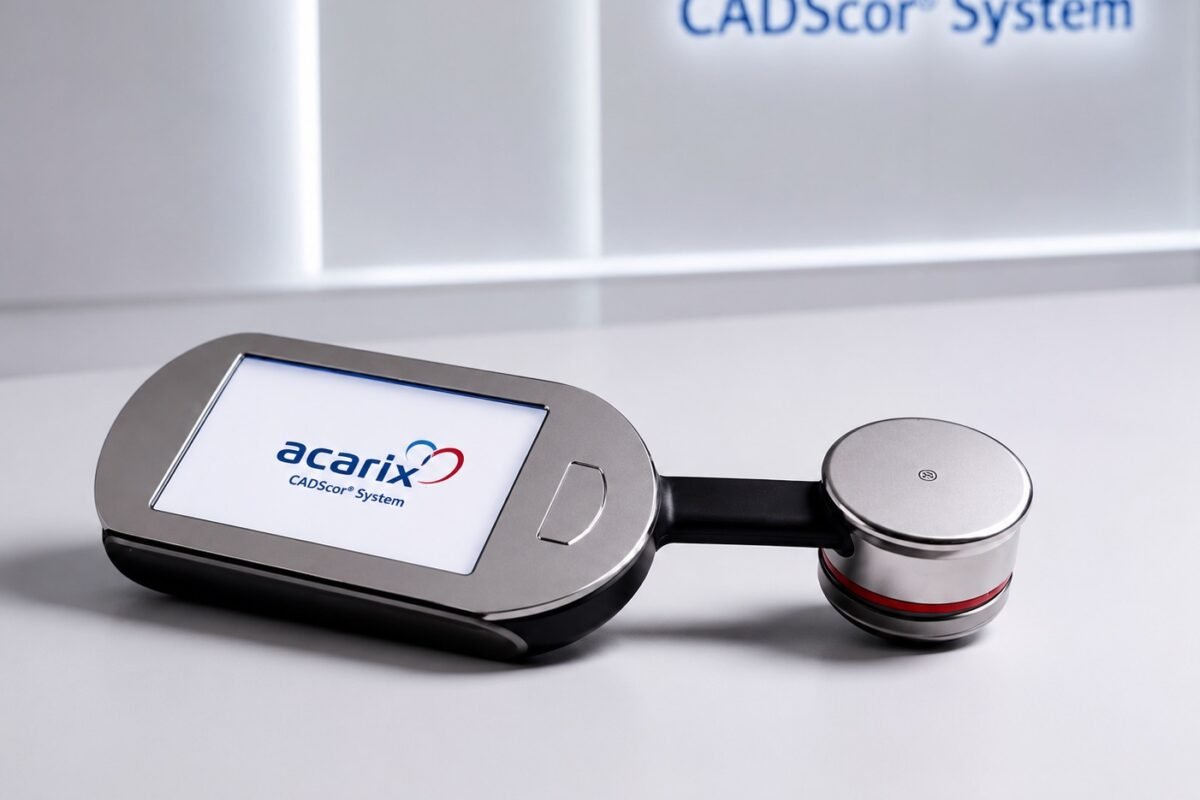
Acarix CADScor®
CADScor® is a non-invasive system utilizing acoustic sensor technology, developed to assist in assessing coronary artery disease risk in suitable patients experiencing chest pain.
Applicable in approximately 10 minutes, this technology can be used as a supportive tool for clinical evaluation and does not replace a standalone diagnosis.
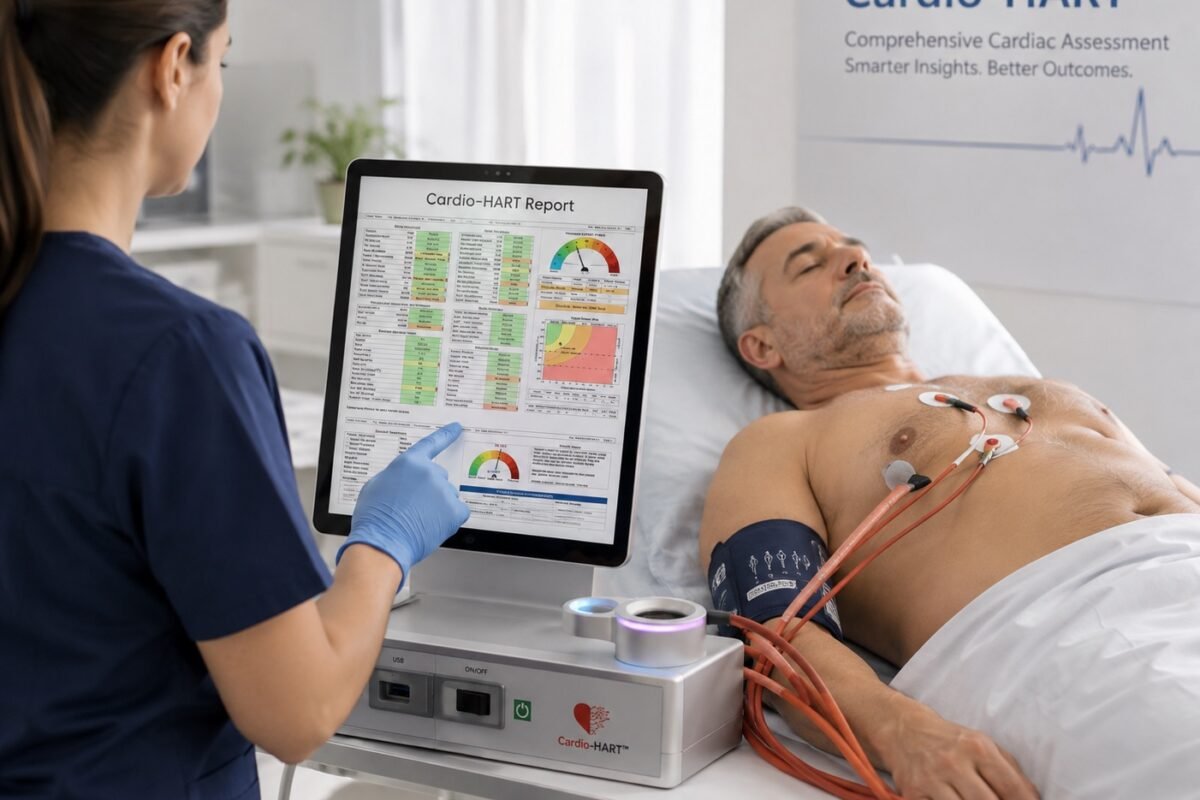
Cardio-HART™
Cardio-HART™ is a technology evaluating electrocardiography (ECG), digital stethoscope data, and advanced cardiac parameters together using AI-assisted analysis.
In suitable patients, it can provide additional information that may assist in evaluating heart failure, valve diseases, and certain structural heart diseases. This system does not replace physician examination and other required cardiological tests; it is used to support the clinical decision-making process.
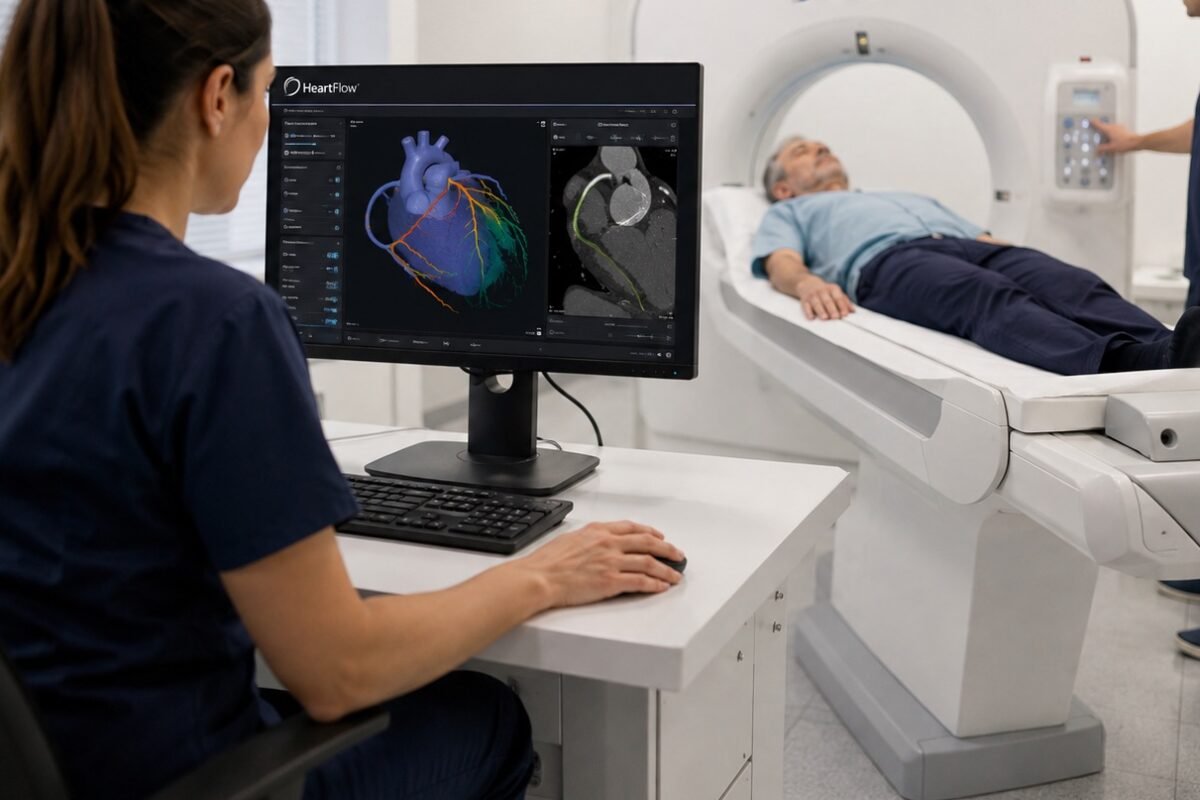
HeartFlow
HeartFlow is an advanced imaging technology that can contribute to the functional assessment of coronary vessel stenosis by using AI-assisted analysis of coronary CT angiography images.
It can be evaluated to support interventional treatment planning in suitable patients.
Preventive Cardiology
In addition to treating heart diseases, prevention is also an important area of cardiology practice.
Within the scope of preventive cardiology, personalized assessments are made regarding:
Hypertension control
Cholesterol evaluation
Supporting diabetes management
Healthy nutrition
Regular exercise
Smoking cessation
Cardiovascular risk analysis
Regular cardiology checkups
Serving Patients from Different Regions of TRNC
The MediHeart Medical Center Cardiology Department serves patients coming from all regions of TRNC, primarily Guzelyurt, Lefke, Nicosia, Kyrenia, Famagusta, and Iskele.
Additionally, cardiology evaluations, interventional cardiology, and arrhythmia treatments can be planned for international patients applying from across North Cyprus and Cyprus.
Frequently Asked Questions
When should I consult a cardiology specialist?
If you have complaints such as chest pain, palpitations, shortness of breath, fainting, unexplained fatigue, or high blood pressure, a cardiology evaluation may be recommended.
Which tests can be performed during a cardiology examination?
According to the physician’s evaluation, ECG, Echocardiography, Holter, Blood Pressure Holter, Exercise Stress Test, and other advanced cardiological investigations can be planned.
Can EECP be applied to everyone?
No. EECP is not suitable for every patient. Treatment suitability is determined after a detailed evaluation by a cardiology specialist.
Do Acarix CADScor®, Cardio-HART™, and HeartFlow make diagnoses?
These technologies are tools supporting the physician’s clinical assessment in suitable patients. They do not make definitive diagnoses on their own; results are evaluated alongside examinations and other tests.
Can I book an appointment from different cities in TRNC?
Yes. The MediHeart Medical Center Cardiology Department serves patients applying from different regions of TRNC, including Guzelyurt, Lefke, Nicosia, Kyrenia, Famagusta, and Iskele.
Is it possible to apply from Cyprus?
Yes. Where appropriate, cardiology evaluation and follow-up processes can also be planned for patients coming from across Cyprus.
Appointments and Contact
To get information about evaluations regarding your heart health, interventional cardiology procedures, rhythm disorders, structural heart diseases, or advanced cardiological technologies, you can contact the MediHeart Medical Center Cardiology Department.