

EECP Therapy (Enhanced External Counterpulsation) | Cardiovascular Treatment | MediHeart Medical Center Güzelyurt
EECP Therapy (Enhanced External Counterpulsation) is a non surgical treatment method aimed at supporting cardiac blood perfusion in suitable patients. To whom is EECP therapy applied, how is it performed, and what is the treatment process like? Get detailed information with the evaluations of Prof. Dr. Osman Beton.
EECP Therapy (Enhanced External Counterpulsation)
Coronary artery disease is one of the major cardiovascular diseases that occurs when the vessels supplying the heart narrow or become blocked, resulting in insufficient oxygen and nutrients being delivered to the heart muscle. While medication, stent placement, or bypass surgery provide suitable results in some patients, chest pain (angina) complaints may persist in others, or interventional treatment options may not always be appropriate. One of the supportive treatment methods that can be evaluated in such situations is the application of EECP Therapy (Enhanced External Counterpulsation).
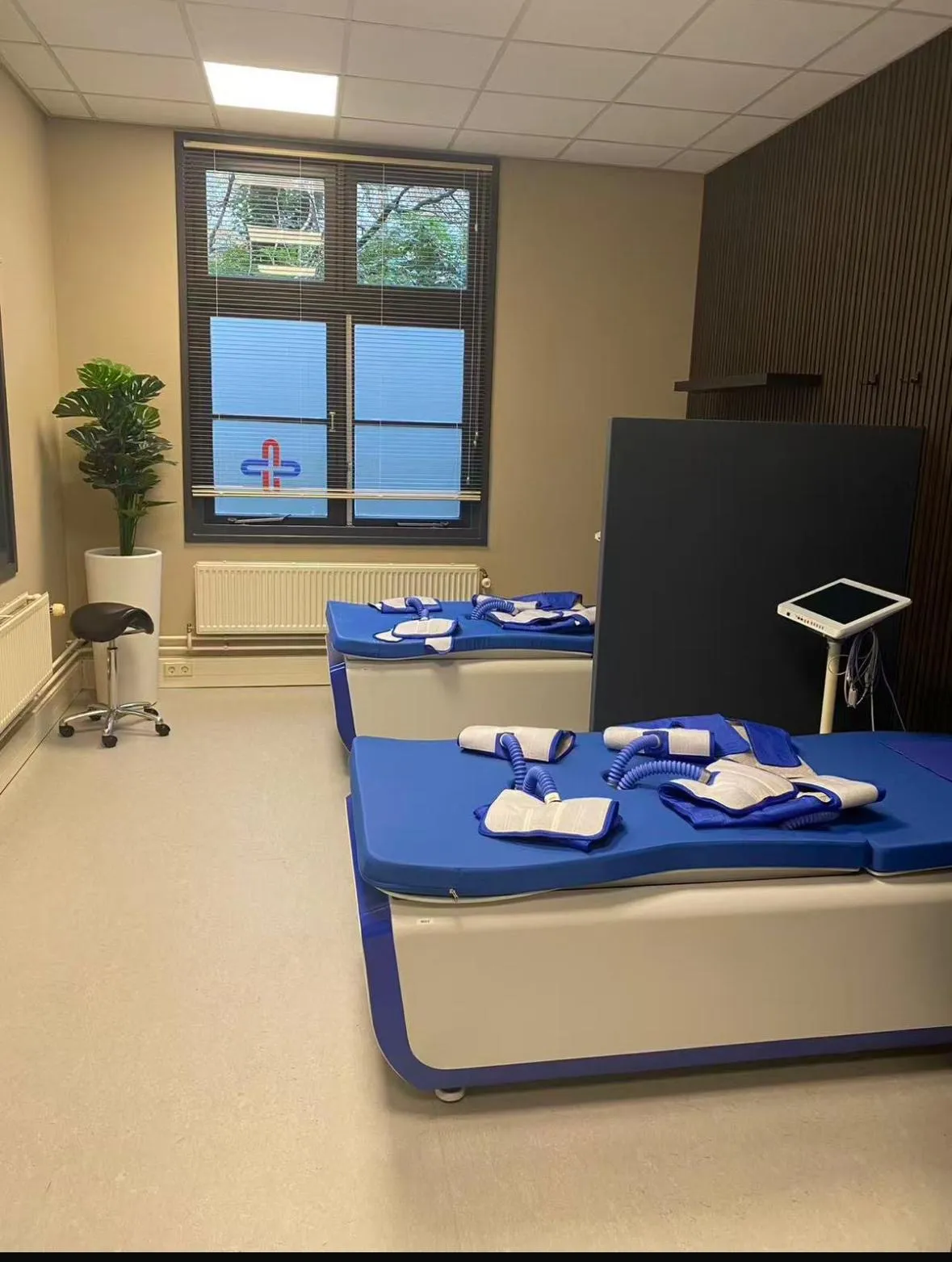
EECP is a non invasive treatment method that does not require surgical procedure, is applied from outside the body, and aims to support cardiac blood perfusion. During treatment, specialized air cuffs placed on the legs are inflated and deflated synchronously with the heart rhythm, aiming to support circulation. The objective is to help increase blood flow reaching the heart muscle and contribute to improving the quality of life in suitable patients. However, since it may not be suitable for every patient, the treatment decision is made after a detailed cardiology evaluation.
At MediHeart Medical Center Güzelyurt Cardiology Department, patients requiring EECP therapy are thoroughly evaluated by our Cardiology Specialist Prof. Dr. Osman Beton. The patient’s existing heart disease, complaints, administered treatments, and general health status are examined together to determine whether EECP therapy is appropriate.
What is EECP Therapy (Enhanced External Counterpulsation)?
EECP (Enhanced External Counterpulsation) is a non surgical and non interventional treatment method aimed at supporting more effective blood perfusion of the heart. During the procedure, pneumatic cuffs placed on the patient’s legs are inflated and deflated at specific times synchronously with the ECG.
Through this controlled application of pressure, it is aimed to support blood flow returning to the heart and contribute to increasing coronary circulation. The primary objective of the treatment is to contribute to reducing chest pain complaints, supporting physical activity capacity, and improving quality of life in suitable patients.
To Whom Can EECP Therapy Be Applied?
EECP therapy is not applied to every heart patient. The treatment decision is made by evaluating the cardiology examination, existing diseases, and the patient’s general clinical condition.
It can generally be evaluated in the following patient groups:
Patients with coronary artery disease
Individuals whose chest pain persists despite drug therapy
Patients for whom stent or bypass cannot be performed due to certain reasons
Suitable patients with chronic stable angina
Specific heart failure patients deemed appropriate by the cardiology specialist
For every patient, the potential benefits that the treatment may provide and suitability status are evaluated individually.
How is EECP Therapy Applied?
During EECP therapy, the patient lies on a specially designed treatment bed. Air cuffs placed on the calves, thighs, and buttocks are operated in harmony with the heartbeats with the aid of an ECG device.
During the relaxation phase of the heart, the cuffs are inflated sequentially to help direct blood toward the heart. Immediately before the heart contracts, the cuffs are rapidly deflated, aiming to reduce the workload on the circulation. This procedure is performed in a fully computer controlled manner.
No surgical incisions are made, no catheters are used, and no general anesthesia is administered during treatment. Patients remain awake throughout the procedure and can return to their daily lives after the treatment is completed.
What Are the Possible Benefits of EECP Therapy?
EECP therapy is not an application that replaces other treatment methods in the suitable patient group, but rather a supportive treatment option that can be evaluated in specific situations.
In suitable patients, it can:
Contribute to reducing the frequency of chest pain.
Help increase physical activity capacity.
Contribute to supporting cardiac blood perfusion.
Support performing daily life activities more comfortably.
Help improve the quality of life.
However, obtaining the exact same clinical results in every patient cannot be guaranteed. The success of the treatment depends on many factors such as the severity of the patient’s heart disease, accompanying conditions, and compliance with the treatment.
Risks of EECP Therapy and Conditions Where It Cannot Be Applied
Although EECP Therapy (Enhanced External Counterpulsation) is accepted as one of the safe treatment methods not requiring surgical intervention, it is not suitable for every patient. This is the main reason for conducting a detailed cardiology evaluation prior to treatment.
EECP therapy may not be recommended in certain heart valve diseases, uncontrolled rhythm disorders, active vascular diseases, severe peripheral artery disease, deep vein thrombosis, uncontrolled hypertension, or other clinical conditions deemed inappropriate by the physician. For this reason, the patient’s current health status is evaluated in detail and necessary tests are completed before starting treatment.
How Many Sessions of EECP Therapy Are Applied?
EECP therapy is applied in accordance with a specific treatment program. The number of sessions may vary according to the patient’s clinical condition, response to treatment, and the planning of the cardiology specialist.
Application is generally carried out in regular sessions on specific days of the week. Each session lasts approximately one hour. Throughout the treatment period, the patient’s complaints, exercise capacity, and general clinical condition are monitored regularly. The treatment plan can be readjusted when necessary.
Points to Consider After Treatment
Following EECP therapy, the vast majority of patients can resume their daily lives on the same day. Nevertheless, the long term success of the treatment is not limited solely to the administered sessions.
In order to protect heart health:
Not neglecting cardiology checkups,
Regularly taking medications recommended by the physician,
Smoking cessation,
Ensuring control of blood pressure, diabetes, and cholesterol,
Adopting heart healthy dietary habits,
Engaging in regular physical activity
are among the crucial components of the treatment process. Healthy lifestyle habits play a major role in the long term management of coronary artery disease.
Importance of Personalized Evaluation in EECP Therapy
Coronary artery disease can follow a different course in every patient. While interventional cardiology applications take precedence in some patients, drug therapy or supportive methods may become more suitable options in others. Therefore, the suitability of EECP therapy must be determined not through a standardized assessment, but by taking into account all clinical characteristics of the patient.
At MediHeart Medical Center Güzelyurt Cardiology Department, when creating a treatment plan, the patient’s complaints, coronary angiography findings, cardiac functions, accompanying conditions, and ongoing treatment process are evaluated together. Thus, it is aimed to determine the most appropriate approach for each patient.
EECP Therapy at MediHeart Medical Center Güzelyurt
At MediHeart Medical Center Güzelyurt, current cardiology practices in the diagnosis and treatment of coronary artery diseases are planned in accordance with scientific guidelines. Patients considered for EECP Therapy (Enhanced External Counterpulsation) application are also taken through a comprehensive cardiological evaluation to create a personalized treatment program.
Our Cardiology Specialist Prof. Dr. Osman Beton determines the most appropriate approach by evaluating not only current complaints but also the patient’s overall cardiovascular risk profile during the treatment process. The goal is to provide treatment options based on scientific data that will support the patient’s quality of life.
Frequently Asked Questions
Is EECP therapy surgery?
No. EECP Therapy (Enhanced External Counterpulsation) is a non invasive treatment method applied without catheters and does not require surgical procedure.
Is pain felt during treatment?
The rhythmic pressure applied to the legs during treatment may be felt. The vast majority of patients tolerate the application comfortably and remain awake throughout the procedure.
Does EECP therapy replace stenting or bypass surgery?
No. EECP therapy is not an alternative to stenting or bypass surgery for every patient. Which treatment is appropriate is decided solely as a result of the evaluation conducted by the cardiology specialist.
When can one return to daily life after treatment?
The vast majority of patients can resume their daily activities on the same day following treatment. However, you should follow your physician’s advice for recommendations suitable for your personal condition.
To whom is EECP therapy not suitable?
EECP therapy may not be appropriate in certain severe heart valve diseases, active vascular diseases, uncontrolled rhythm disorders, and specific clinical situations. The definitive evaluation is made by the cardiology specialist.
Conclusion
EECP Therapy (Enhanced External Counterpulsation) is one of the non surgical and non interventional treatment options aimed at supporting cardiac blood perfusion in suitable patients. It ranks among the methods that can contribute to reducing chest pain, supporting physical activity capacity, and improving quality of life, particularly in specific patient groups. However, since it may not be suitable for every patient, the treatment decision must strictly be made after a detailed cardiological evaluation.
In line with comprehensive evaluations conducted by Prof. Dr. Osman Beton at MediHeart Medical Center Güzelyurt Cardiology Department, a personalized treatment plan is created for each patient. Patients applying from across Güzelyurt, TRNC, Cyprus, and North Cyprus can receive detailed evaluations regarding coronary artery disease, chest pain, chronic angina, interventional cardiology, and EECP Therapy. If you have complaints regarding your cardiovascular health, consulting a cardiology specialist at an early stage can contribute to determining the appropriate treatment options.