


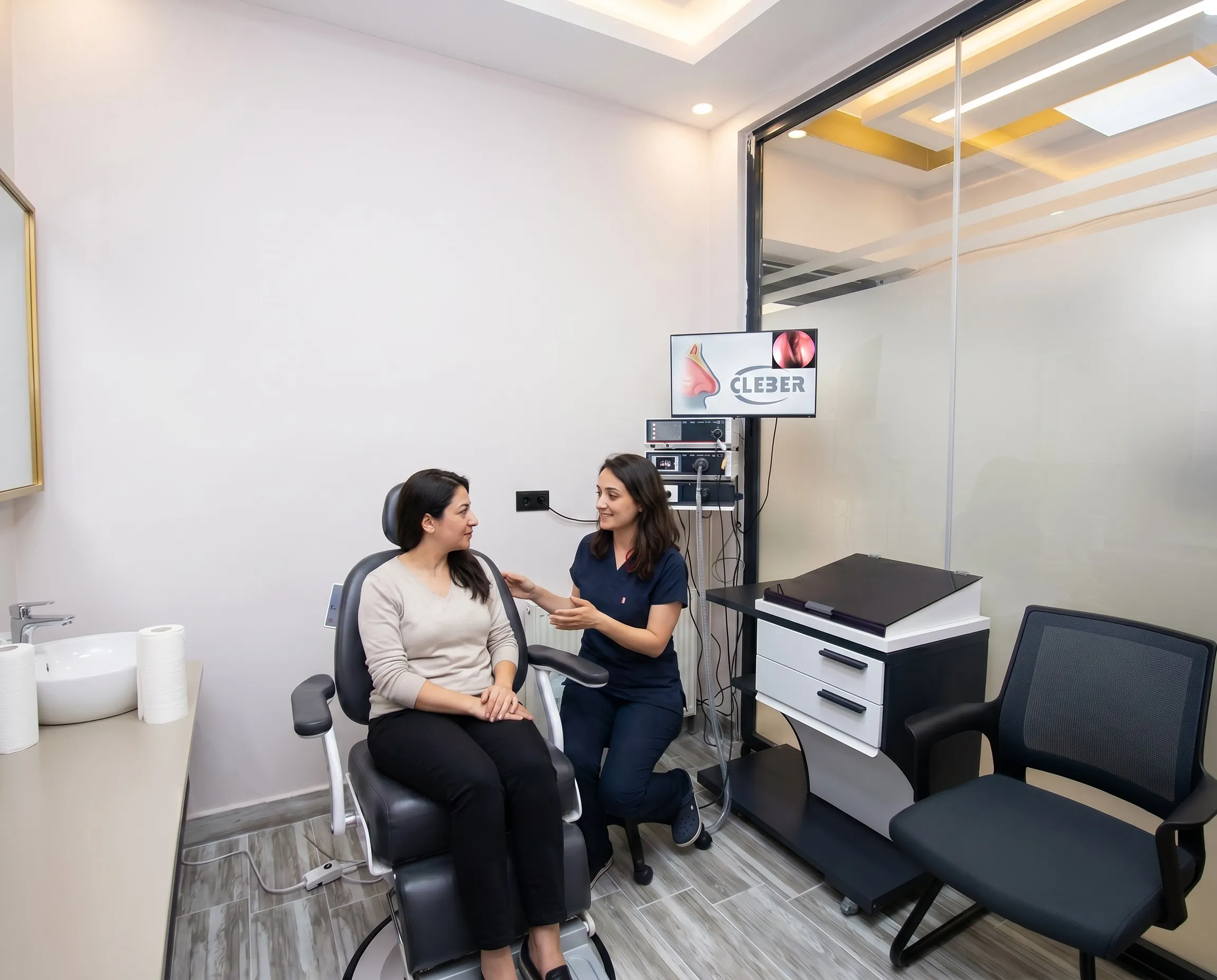
What is an Endoscopic Examination, and How Does It Differ from a Standard Examination?
In an endoscopic examination, a thin, flexible device equipped with a camera at its tip is used to view regions of the nose, nasopharynx, and larynx with high resolution that cannot be directly seen during a standard examination. In this way, details such as septum deviation, nasal polyps, adenoid hypertrophy, or minor changes on the vocal cords are revealed much more clearly. A standard examination usually provides a limited field of view restricted to the nasal entrance and the inside of the mouth. The endoscope, however, reaches the furthest back points of the nasal cavity and down to the larynx, providing a far more comprehensive evaluation. This method helps the physician understand the source of the complaint more clearly and shape the treatment plan accordingly.
Which Symptoms Require an Endoscopic Examination?
Nasal congestion (unilateral or bilateral): Detailed internal inspection of the nose is required when allergies, nasal polyps, or septum deviation are suspected.
Hoarseness lasting longer than 2 weeks: This condition requires evaluation of the vocal cords via an endoscope.
Chronic need for throat clearing or a globus sensation (feeling of something stuck in the throat): These complaints necessitate an examination of the larynx and pharynx regions.
Suspected chronic sinusitis: Endoscopic examination is recommended to evaluate sinus openings and intra-nasal structures.
How is the Procedure Performed, and Is It Painful?
Prior to the procedure, a mild anesthetic spray is applied inside the nose. This briefly numbs the area. An endoscopic examination usually takes only a few minutes. The vast majority of patients do not feel significant discomfort during the procedure. Flexible endoscopes can advance through the nose and nasopharynx down to the larynx. The video feed of these regions projected on the screen is evaluated simultaneously. Patients can immediately return to their daily activities after the procedure.
Importance of Early Diagnosis
Noticing chronic sinusitis, nasal polyps, or vocal cord issues at an early stage contributes to managing the treatment process in a shorter time and with less invasive methods. An evaluation conducted before complaints progress and structural changes become permanent helps the physician determine the appropriate treatment approach early on. Regular ENT check-ups and not ignoring complaints play a key role in this regard.